
On this page 7
- The Fast and Furious: Tokyo Drift Evo Is a Movie Car, Not an Identified Android Game
- Sean’s Tokyo Drift Mitsubishi and Paul Walker’s Evo Belong to Different Films
- Factory All-Wheel Drive Does Not Explain Every On-Screen Drift
- A C-West Reference Is Not a Complete Tokyo Drift Build Sheet
- The 1:24 Evo Result Refers to a Collectible, Not Software
- An Evo Screenshot Does Not Authenticate a Tokyo Drift APK
- Three Related Questions About Evo Imports, STI Performance, and the Mustang
The Fast and Furious: Tokyo Drift Evo Is a Movie Car, Not an Identified Android Game
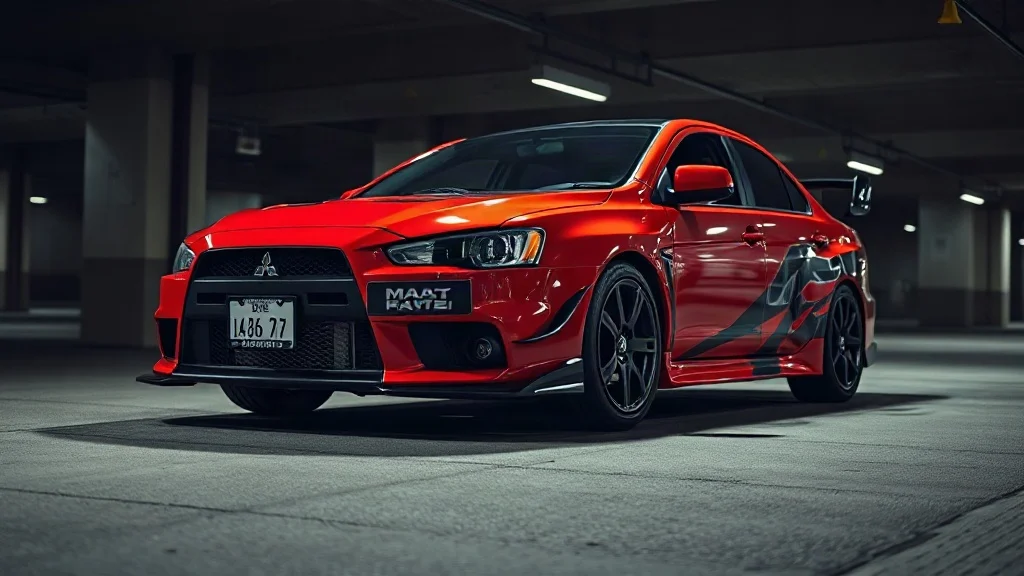
The Mitsubishi in Tokyo Drift deserves a clear identification because movie cars, collectibles, and game images often appear together online. “Fast and furious: tokyo drift evo” refers to the Mitsubishi Lancer Evolution IX associated with Sean Boswell in The Fast and the Furious: Tokyo Drift, not a verified Android app or game.
The available results concern the movie’s Evos, enthusiast discussions, and a 1:24 miniature. They do not establish a matching Android title, developer, official store listing, or APK download destination. A familiar car on a download page cannot fill those gaps.
Start by separating the objects involved. The depicted vehicle is a full-size movie car. A production Evolution IX provides the engineering baseline, while a filming vehicle may have modifications. A miniature reproduces its appearance at a smaller scale. A game representation is another separate product with its own vehicle roster and licensing arrangements.
This distinction helps movie fans identify the Mitsubishi and helps Android users avoid mistaking automotive content for software. Anyone seeking a playable racing game still needs an identifiable game listing. There are no verified app features, device requirements, or installation instructions to report for this phrase.
Sean’s Tokyo Drift Mitsubishi and Paul Walker’s Evo Belong to Different Films
Sean Boswell’s Tokyo Drift Mitsubishi is an Evolution IX. The Evo driven by Paul Walker’s character, Brian O’Conner, in 2 Fast 2 Furious is an Evolution VII, so the two film references should not be combined.
The Evo associated with Sean Boswell
In The Fast and the Furious: Tokyo Drift, Sean Boswell is played by Lucas Black. The red Mitsubishi associated with his drift training is the Evolution IX, commonly shortened to Evo IX or Evo 9.
That identification is the useful starting point when checking a photograph, model listing, or game vehicle description. Look for the film name and generation together rather than relying on “Fast & Furious Mitsubishi.” The franchise includes different Mitsubishis, and a broad caption can conceal a mistaken identification.
A scene also identifies a fictional vehicle, not necessarily one unchanged physical car used throughout production. Close-up photography and driving sequences can require different preparation. Avoid turning a character’s association with the Evo into an unsupported claim about a particular surviving chassis.
The Evolution VII driven by Brian O’Conner
The answer to “What Evo did Paul Walker use?” in the context of 2 Fast 2 Furious is the Mitsubishi Lancer Evolution VII. Brian’s green Evo belongs to that earlier film, not Sean’s Tokyo Drift storyline.
This is a statement about Walker’s on-screen role. It does not establish which cars he personally owned or drove outside production. When identifying a replica, keep the character, film, and Evolution generation together; that prevents a correct car name from being attached to the wrong movie.
Factory All-Wheel Drive Does Not Explain Every On-Screen Drift
The production Mitsubishi Lancer Evolution IX uses all-wheel drive. That factory layout does not, by itself, establish how each Tokyo Drift filming vehicle was configured.
What the road-going Evo’s drivetrain tells you
All-wheel drive, abbreviated AWD, sends engine torque to both the front and rear axles. Rear-wheel drive, or RWD, sends propulsion to the rear wheels. These terms describe where driving force goes, not whether a vehicle can ever slide.
Rear-wheel drive is commonly used for drifting because the driver can use power at the rear tires to help initiate and sustain oversteer. Steering, throttle control, available grip, and chassis setup still matter. A rear-driven car does not automatically become an easy or safe drift car.
An AWD vehicle can also slide under suitable conditions. However, maintaining a controlled drift with a factory AWD system is a different task from doing so in a purpose-built RWD car. A sideways movie shot cannot reliably reveal the drivetrain underneath.
Why film-car modifications need separate documentation
The available enthusiast snippet raises the subject of drivetrain conversion, but it is not a complete production record. It cannot prove that every Evo used for the film shared the same conversion, output, or suspension setup.
To verify a mechanical claim, look for documentation tied to the actual vehicle: a production build record, a clearly identified builder’s account, or inspection evidence. “The stock Evo has AWD” and “this particular filming car was modified” can both be true. Keep each claim attached to the vehicle it describes.
A C-West Reference Is Not a Complete Tokyo Drift Build Sheet
A C-West styling reference helps identify the look associated with the Tokyo Drift Evo, but it does not establish a complete mechanical specification. Exterior resemblance and engineering equivalence are separate questions.
Start with what photographs can actually support. Body shapes, graphics placement, and visible trim can help assess whether a replica follows the film’s appearance. Even then, camera angle, lighting, and replacement parts can make identification less certain than a caption suggests.
For a replica project, separate the evidence into practical groups:
- Appearance references: clear film frames and photographs showing the relevant exterior details.
- Parts identification: documentation supporting a particular body-kit component or accessory.
- Mechanical records: evidence for the engine, transmission, drivetrain, brakes, and suspension.
- Individual-car history: records connecting those specifications to a particular filming vehicle.
A body-kit name cannot supply the missing information in the other groups. Neither can a red paint finish or matching graphics prove horsepower, wheel dimensions, or drivetrain layout.
Decide whether the goal is a visual tribute or a documented recreation before ordering parts. A tribute can intentionally prioritize appearance. An exact-replica claim requires stronger evidence, especially for components hidden beneath the bodywork.
The 1:24 Evo Result Refers to a Collectible, Not Software
The result labeled “Fast & Furious 1:24 Tokyo Drift Mitsubishi Lancer Evo IX” refers to a scale-model subject. It does not identify an Android game or provide evidence of a downloadable vehicle.
At 1:24 scale, one unit on the miniature represents 24 of the same units on the full-size vehicle. In principle, the model’s corresponding linear dimensions are one twenty-fourth of the original’s. Packaging dimensions are a separate measurement.
That scale tells you about size, not functionality. It does not establish opening doors, steerable wheels, construction material, or the accuracy of the underbody. Those details require a product description or inspection.
The limited result also does not establish a manufacturer, current price, stock status, or licensing arrangement. A video title about a miniature may lead to a demonstration rather than a purchase listing, and unavailable video content supplies little additional evidence.
Before treating an Evo image as a product offer, identify the object being presented. A physical collectible should have model-specific details; a digital vehicle should identify its host game. A photograph of the real Mitsubishi supplies neither. This simple check prevents a miniature review from becoming mistaken evidence for an APK.
An Evo Screenshot Does Not Authenticate a Tokyo Drift APK
A Mitsubishi image or Tokyo Drift title does not establish that an APK is licensed, trustworthy, or connected to an identifiable game. The available evidence confirms no matching Android app or download destination for this subject.
Separate a game’s vehicle roster from its promotional imagery
A car may appear in a screenshot because it belongs to a game, a modification, a fan-made render, or an unrelated promotional composition. The image alone cannot tell you which explanation applies.
For a racing game, check whether its own description or documented vehicle roster names the Mitsubishi Lancer Evolution IX. Even confirmed inclusion of that model does not automatically establish the Tokyo Drift livery, film characters, or a licensed movie connection. Those are additional claims requiring separate support.
This matters if your goal is specific: driving an Evo IX is not necessarily the same experience as playing an adaptation of the film. Choose based on documented content rather than recognizable artwork.
Check store information before assuming a film connection
To look for an Android racing game, search Google Play using an identifiable game title or a general term such as Mitsubishi racing game. Read the developer name, description, and vehicle information before deciding whether the listing matches what you want.
Check requested permissions against the game’s stated functions, and do not treat a familiar film image as proof of developer identity. If a separate APK page makes claims that cannot be connected to a clear store listing or publisher, those claims remain unverified.
There is no supported installation flow to provide for “fast and furious: tokyo drift evo.” Supplying one would turn a movie-car identification into an invented software recommendation.
Three Related Questions About Evo Imports, STI Performance, and the Mustang
Evolution VI import rules, Evo-versus-STI performance, and the Tokyo Drift Mustang concern separate vehicles and evidence. These frequently asked questions should not be used to infer specifications for Sean’s Evolution IX.
Are Evolution VI models legal in the United States?
A Mitsubishi Lancer Evolution VI can qualify for the federal 25-year motor-vehicle safety exemption once the individual car reaches 25 years from its manufacture date. The model name or advertised model year alone is not enough to establish eligibility. Federal emissions requirements are separate: the EPA generally provides an exemption for qualifying vehicles at least 21 years old with their original, unmodified engine configuration, subject to its requirements. A modified or engine-swapped car needs particular care. Federal import eligibility also does not guarantee state registration or emissions compliance. Before buying, verify the manufacture date, engine configuration, import documents, and requirements in the state where the car will be registered.
Is an Evo faster than an STI?
There is no single Evo-versus-STI winner because both names cover multiple generations, specifications, and markets. A meaningful comparison must identify the exact Mitsubishi and Subaru, whether each is stock, and the performance measure. A standing-start acceleration test measures something different from passing acceleration, top speed, or a circuit lap. Transmission, tires, surface conditions, and modifications can change the result. For a useful comparison, use instrumented tests of the specified versions under comparable conditions rather than combining a modified car’s result with a stock rival’s published figure. The Tokyo Drift Evo’s screen appearance supplies no reliable performance benchmark for either production model.
Was the Tokyo Drift Mustang a real car?
Yes. Physical Ford Mustang film cars were used in The Fast and the Furious: Tokyo Drift. The story depicts a Mustang receiving a Nissan Skyline-sourced RB26 engine, but that does not mean every Mustang prepared for filming had that engine or an identical mechanical setup. A vehicle used for engine-bay close-ups can have different requirements from one prepared for repeated driving stunts. When checking a Mustang offered as a movie car or replica, distinguish the on-screen story from the individual vehicle’s documented build. Verify both production provenance and mechanical records before treating a seller’s “Tokyo Drift specification” description as evidence.




Comments